
K11 waterproof coating is a high-performance waterproofing coating, it widely used in building waterproofing projects. It is composed of polymer emulsions, cement, and additives, forming a continuous, after apply to substrate surface, forma dense waterproof film, which effectively prevent water penetration.
Due to its excellent adhesion, water resistance, and easy to use, K11 waterproof coating is commonly used in : such as bathrooms, kitchens, balconies, basements, roofs, and swimming pools. However, the waterproofing effect depends not only on product quality but also on proper substrate treatment, application methods, and maintenance. Improper application can lead to coating cracking, peeling, flaking, or waterproofing failure.
Features:
1) ● Excellent waterproof performance
● Forms a continuous and dense waterproof film, effectively preventing water penetration
● Suitable for damp areas such as bathrooms, kitchens, balconies, basements, and swimming pools
2) ● Strong adhesion
● Strong adhesive to concrete, cement mortar, brick walls, and other substrates
● Not easy blistering to hollowing and peeling
3) ● Excellent crack resistance
● Flexible K11 can withstand minor building vibrations and micro-cracks in the substrate, reducing the risk of cracking
4) ● Suitable for Damp Substrate
● Substrates do not need to be completely dry;
● Particularly suitable for damp environments such as bathrooms and underground projects
5) ● Easy Application
● Available for brush/ roller/spray
6) ● Breathable & Environmentally Friendly
● maintain a certain degree of breathability in the substrate
● Water-based material, low odor, more suitable for indoor use
The following is the standard application procedure for K11 waterproof coating:
Step 1: Surface Preparation
Surface preparation is the most crucial step in K11 waterproofing construction.
Before use, the substrate must be free of free of dust, oil, laitance, release agents, and also is firm, clean and flat, no have others impurities that could affect adhesion.
Main preparation steps:
1) Clean the substrate
Use a brush, high-pressure water gun, or other tools to remove dust, sand, oil, and loose materials from the surface.
For old walls or old concrete surfaces, check for hollow areas, cracks, or peeling areas and repair them in advance.
2) Repair cracks and holes
If the substrate has cracks, honeycomb-like pits, or holes, fill them with repair mortar first.
For larger structural cracks, suggest to reinforce them first, such as by using waterproof sealant or reinforcing mesh, to prevent the waterproof layer from cracking later.
3) Keep the substrate moist
Before construction, it is recommended to spray water to moisten the concrete or cement mortar substrate, but there should be no standing water on the surface.
Proper moisture can reduce the rapid water absorption of the substrate and improve the bonding effect between the K11 waterproof coating and the substrate.
Important Note: The dry substrate needs to be moistened with water before application, but there should be no standing water.
Step 2: Mixing K11 Waterproof Coating
K11 waterproof coating package including liquid component and powder component. Proper mixing is key for ensuring product performance.
Material Mixing:
1. Pour the liquid component into a clean container.
2. Slowly add the powder component.
3. Use an electric mixer to mix thoroughly.
4. Mix until a smooth, lump-free paste is formed.
5. Let it stand for a few minutes, then mix again before use.
Note:
※ No suggest add water or other materials, as this may affect the waterproofing performance.
※ After mixing, please use the mixture within the specified time to avoid affecting the application results once the material begins to harden.
Step 3: Apply K11 Waterproof Coating
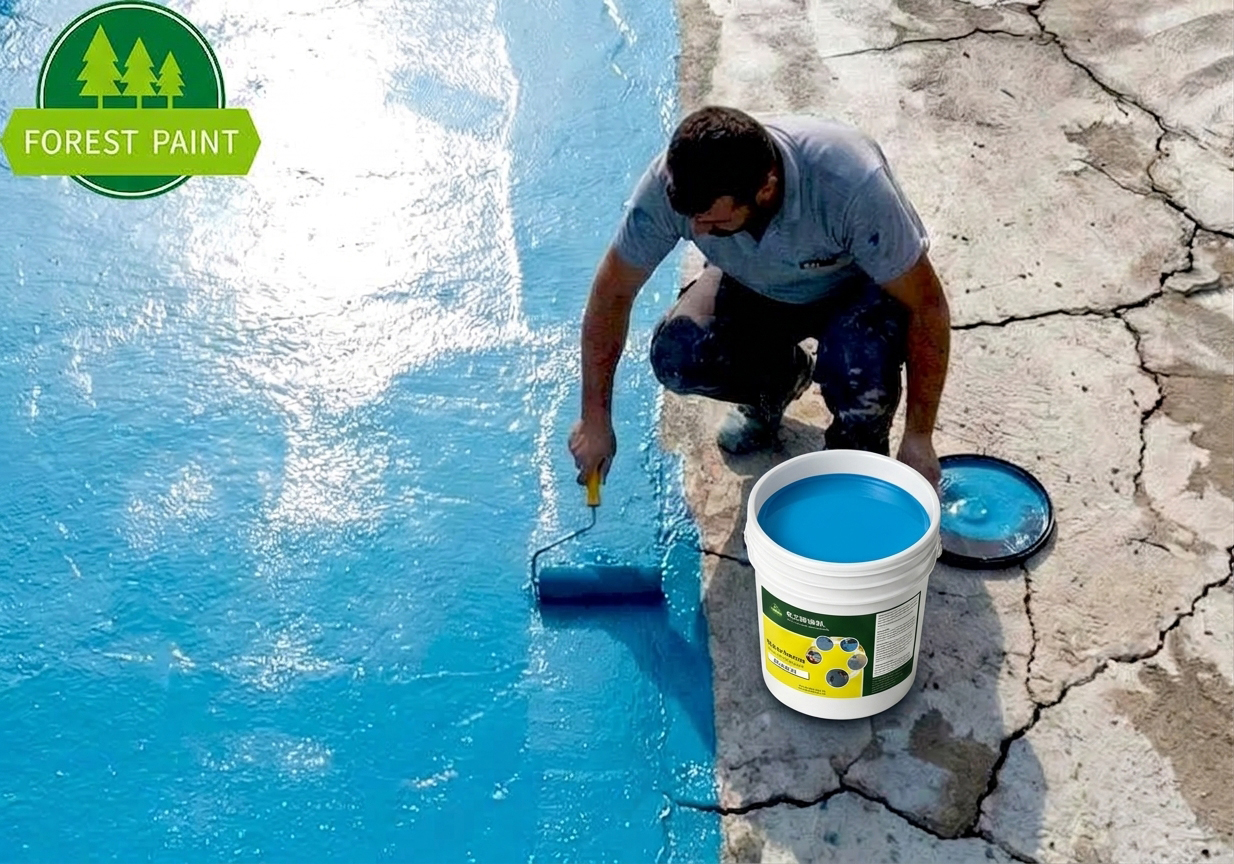
1st coat: Use a brush or roller to apply the first coat evenly. The main purpose is to enhance the penetration of the substrate and improve adhesion.
Note:
● Apply a thin, even coat to cover the substrate; do not apply too thick a coat at once.
● Ensure the coating fully covers the substrate, avoiding any missed areas.
● Brushing, rolling, or spraying are available
● To better waterproof effect, suggest to 2-3coats Thickness approx 1.2–2.0 mm (thickness adjusted according to customer requirements).
2nd coat: After the 1st coat drying, apply the 2nd coat. Apply the 2nd coat perpendicular to the 1st to improve coverage
For example: First coat: horizontal application; second coat: vertical application. This reduces omissions and improves the overall integrity of the waterproof layer.
For following areas,need to reinforcement:
● Wall corners
● Inside and outside corners
● Around pipes
● Around floor drains
● Joints
These areas are easy to stress concentration and are common areas for leakage.
Adding a waterproof reinforcement layer in advance, such as:
● Waterproof reinforcement mesh
● Non-woven fabric
● Sealing materials
● Improves long-term waterproof reliability
Step 4: Curing Requirements
Finish construction, proper curing is crucial for the performance of the K11 waterproof coating. Require curing guidelines:
● Avoid rainwater washing
● Avoid foot traffic and mechanical damage
● In hot, dry environments, suggest to spray water
● After complete drying, continue next step such as tiling
We have summarized common problems by customers and solve solutions for you reference only.
Common Problems and Solutions
1. Cracks in the waterproof layer
Possible causes:
1) Untreated cracks in the substrate
2) Coating too thick
3) Insufficient curing
Solution: Repair the substrate before application and apply the coating in layers as required.
2. Coating peeling
Possible causes:
1) Dust not cleaned from the substrate
2) Overly dry substrate
3) Insufficient adhesion
Solution: Strengthen substrate treatment and ensure the substrate meets requirements before application.
3. Unsatisfactory waterproofing effect
Possible causes:
1) Insufficient coating thickness
2) Partial area missed coating
3) Construction details are not handled properly.
Solution: Ensure a complete and continuous waterproof film and strengthen the treatment of key areas.
For different project environments (bathrooms, basements, roofs, swimming pools, etc.), it is recommended to choose an appropriate construction plan based on the specific substrate conditions.
Standard the construction process, including substrate treatment, material mixing, multiple coats, and good curing, which not only improve the durability of the waterproofing, but also can provide long-term reliable waterproof protection for the building.
Post time: Sep-16-2026