

In the construction and infrastructure sector, particularly in the telecommunications industry, it is very important to choose the right coating system for substrates. For projects like Ericsson tower installations, one big challenge is choosing the right coatings system for cold-galvanized steel.Cold galvanizing is a process that coats steel surfaces with a zinc-rich coating to prevent corrosion. However, this particular substrate presents unique challenges in terms of coating adhesion and durability. Forest Paint as the coating supplier for Ericsson signal towers coatings system, we will explore how to choose suitable anti-corrosion coatings system to ensure the durability and performance of Ericsson signal towers.
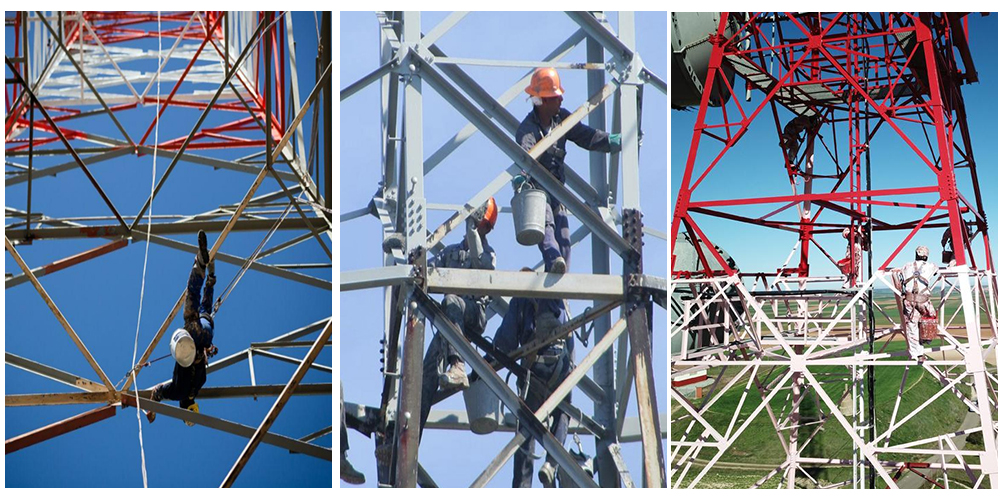
Understanding Cold Galvanized Surfaces:
Cold galvanizing is essentially coating the steel surface with a high-zinc-content paint to form a protective layer for anti corrosion, then the zinc powder provides cathodic protection to prevent rusting. That’s why cold-galvanized steel structures can be exposed to humid, salty, and other corrosive environments sometimes. However, the zinc layer is consumed for long time, and the corrosion protection of cold galvanizing itself is “limited.” To extend lifespan, improve weather resistance, enhance aesthetics, and meet specific environmental requirements, painting is often used to address these shortcomings. The inherent characteristics of the cold-galvanizing process complicate the application of subsequent coatings (such as paint). Zinc particles in the coating can affect paint adhesion, leading to problems like peeling, flaking, and premature paint system failure.
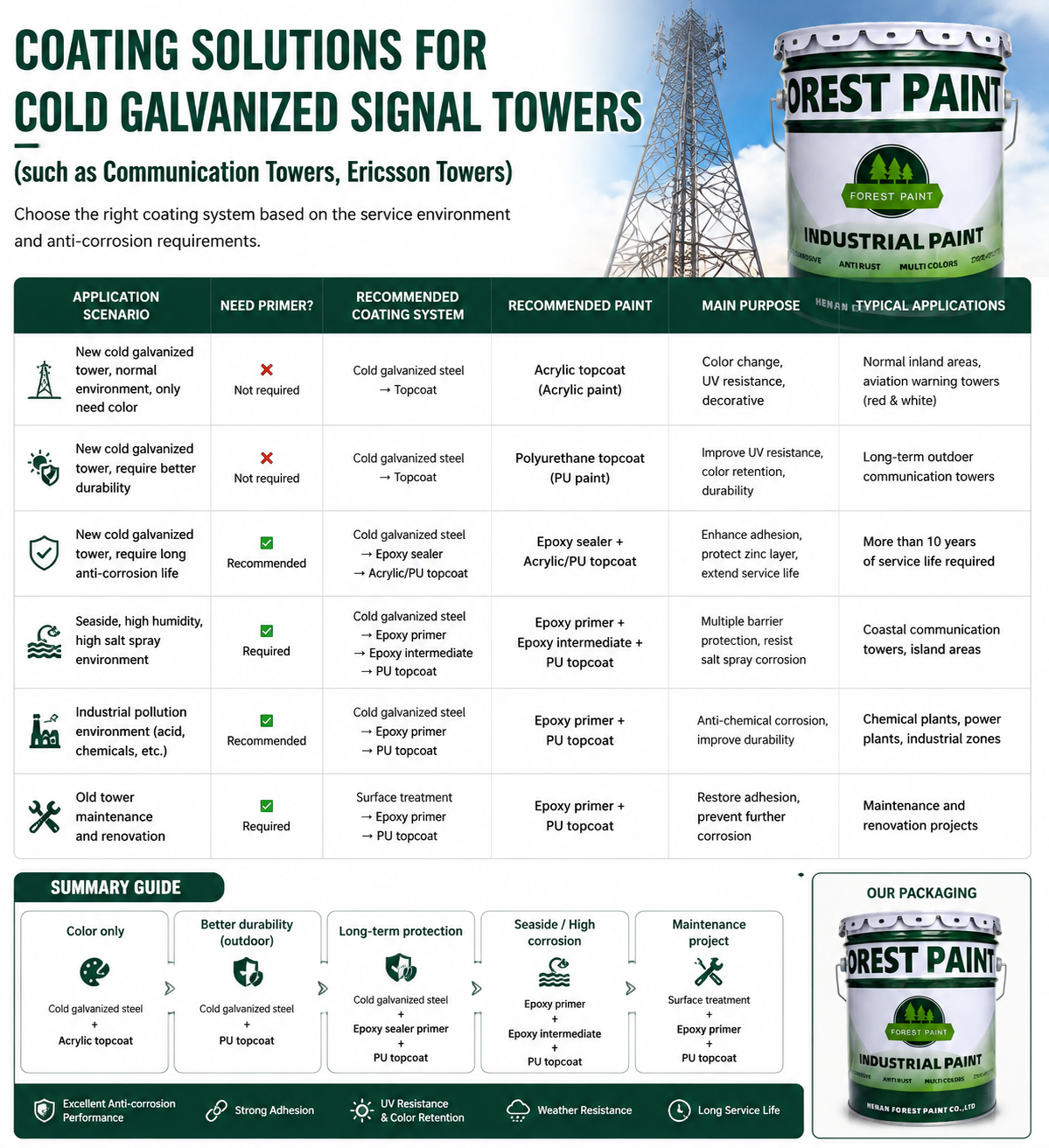
Whether or not painting is necessary for the cold-galvanized steel surfaces of communication towers like Ericsson signal towers depends on project requirements, environment, and maintenance objectives. Generally, cold galvanizing itself provides corrosion resistance, and painting is not usually required. However, in many communication tower projects, to extend towers lifespan or decoration or specific environmental conditions, people will use paint on to improve anti-corrosion performance . According to our years of experience supplying paints for their signal tower projects, we can illustrate how we help them supply coating solutions:
In the following cases, the primer can be skip, and the topcoat can be applied directly.
Case1. Color coating only, no additional corrosion protection required.
Example: New signal tower; Cold-galvanized layer in good condition; Low corrosivity in ordinary environments (non-coastal, non-industrial pollution areas); Simply for color change (e.g., red and white for aviation markings).
However, the following conditions apply:
✅ Dry and stable galvanized layer
✅ Free of oil and dust
✅ Free of white rust
✅ Surface slightly treated to improve adhesion
Case2. The signal tower is located in a low-corrosion environment.
For example: Inland areas; low air pollution; not near the coast; normal humidity; slow rate of cold galvanization wear.
In this case: Cold galvanizing itself can meet the required corrosion resistance lifespan; the topcoat is mainly used for color and UV protection.
Case3. New cold-galvanized steel with good zinc coating quality.
If:
Zinc content is high;
Zinc coating thickness meets requirements;
Surface treatment meets specifications;
Primer application is not required.
Recommended Products:
① Acrylic Paint
Advantages: Good adhesion, fast drying, vibrant colors, lower cost
② Polyurethane Paint
Advantages: Better weather resistance, UV resistance, good color retention, longer service life.
Application coating system: Cold galvanized steel → Acrylic/PU topcoat
However, applying a primer is recommended in the following situations:
|
Condition |
Recommend primer |
|
For coastal signal towers |
√, Epoxy sealing primer recommended. |
|
High humidity, high salt spray areas |
√,Complete system recommended. |
|
Old tower renovation |
√,primer recommended |
|
Requires over 20 years of corrosion resistance |
√,primer recommended |
|
In industrially polluted areas |
√,primer recommended |
Why is recommend epoxy primer? Because the epoxy primer doesn’t replace the zinc layer, but rather:
✅ Enhances topcoat adhesion
✅ Seals pores in the galvanized layer
✅ Prevents zinc salts from affecting the topcoat
✅ Improves overall corrosion resistance lifespan. Now that we know how to choose the right paint, proper application is also crucial.
We now know how to choose the right paint, and proper application is also important.
Surface Preparation: Proper surface preparation is essential for the success of any coating project, especially when dealing with cold-galvanized surfaces. Before applying the primer, the surface must be thoroughly cleaned to remove contaminants such as dust, grease, or oil. This can be achieved through methods such as high-pressure cleaning or using solvent-based cleaners.
After cleaning, the surface must be inspected for signs of corrosion or damage. Any rusted areas should be treated and repaired before painting. After repair, the surface should be lightly sanded to create a contour that enhances adhesion.
Cold galvanized surfaces skip primer (topcoat applied directly):
Confirm the cold-galvanized layer is intact, free from severe rust, peeling, and oil stains; remove dust, grease, salt, and contaminants; lightly sand or brush to improve topcoat adhesion.
1. Topcoat: Apply Acrylic/PU topcoat, controlling film thickness evenly. After drying, apply a second coat to achieve the specified color, thickness, and protection requirements. It is recommended to apply multiple thin coats rather than a single thick coat to avoid problems such as sagging or uneven coating. Sufficient drying time should be allowed between each coat; refer to the manufacturer’s specifications for specific times.
2. Inspection: After the final coat has dried, inspect the painted surface for any defects or areas requiring repair. Address any issues promptly to ensure a uniform coating effect.
Using Primer (High Corrosion Resistance System):
1.Primer: First, apply the selected primer to the cold-galvanized surface. Use a brush, roller, or spray gun to ensure an even coating. Follow the manufacturer’s instructions regarding drying time and re-coating intervals.
2. Topcoat: After the primer has fully cured, apply the acrylic PU anti-corrosion paint.Suggest to apply multiple thin coats rather than a single thick coat to avoid sagging or uneven coating. Sufficient drying time should be allowed between each coat; please refer to the manufacturer’s specifications for specific times.
3. Inspection: After the final coat has dried, inspect the painted surface for any defects or areas requiring repair. Address any issues promptly to ensure a uniform final coating.
In summary, Forest Paint company has extensive experience in Ericsson’s signal tower projects, earning their approval of our recommended coatings. If you are also struggling to choose coatings for cold-galvanized substrates,please contact Forest Paint sale team immediately for professional coating solutions.
Post time: Jul-22-2026