
Many people believe that only using high-quality exterior paint can solve all exterior wall problems, such as peeling, bubbling, dampness, and flaking. However, when these problems inevitably occur, their first reaction is often to complain about the quality of the paint.
Actually, exterior wall problems are rarely caused solely by paint. Many factors can affect exterior walls, including the condition of the substrate, waterproofing treatment, construction methods, and environmental conditions.
To help you achieve a flawless finish, here are 5 correct steps to extend the life of your exterior paint:
1. Apply a waterproof coating before painting the exterior walls.
This is a critical step that many customers easily overlook. The correct construction sequence should always be:
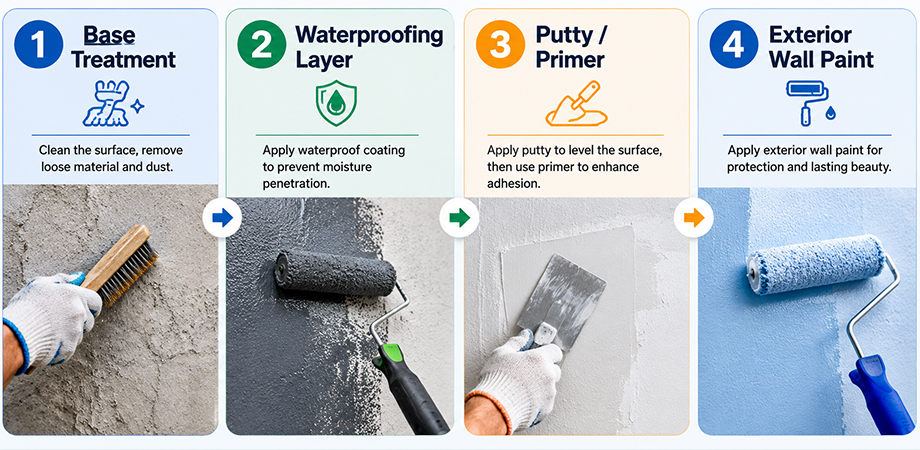
Base Treatment ➔ Waterproofing Layer ➔ Putty/Primer ➔ Exterior Wall Paint
Many contractors only begin waterproofing exterior walls after problems such as water seepage, dampness, and paint peeling have already occurred. This is actually too late and can easily lead to blistering and peeling of the paint film.
The primary function of a waterproof coating is to prevent moisture from seeping out of the wall. If moisture remains in the substrate for an extended period, even high-quality exterior wall paint will struggle to maintain its durability. Therefore, professional waterproofing treatment before applying the topcoat is crucial for addressing water seepage issues at their source.
2. Use a High-Quality Primer to Improve Adhesion
To save costs, many projects neglect the primer application. However, primer is crucial for any exterior wall coating system.
Key Functions of Exterior Wall Primer:
- Improves wall adhesion by binding the topcoat to the substrate.
- Seals alkalinity in the concrete or masonry substrate.
- Reduces efflorescence and whitening issues.
- Enhances topcoat durability for a longer lifespan.Saves topcoat consumption, reducing overall material costs.
- Saves topcoat consumption, reducing overall material costs.
Primer acts as a vital “bonding layer” between the wall and the topcoat. Without it, the lifespan of your topcoat will be significantly shortened.
3. Choose Weather-Resistant Exterior Wall Paint
Exterior walls are constantly exposed to harsh sunlight, heavy rain, extreme temperatures, and ultraviolet (UV) rays, placing higher demands on paint performance.
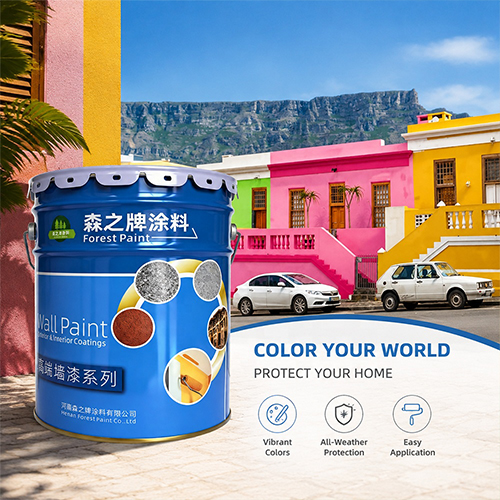
For maximum protection, you should choose professional grade coatings like Forest Paint Weather Resistant Exterior Wall Paint. Our advanced formula delivers outstanding characteristics:
- Excellent UV & Fade Resistance
- Rain Erosion & Chalking Resistance
- Superior Crack & Peeling Resistance
- Mildew, Mold, and Algae Resistance
Investing in superior weather resistance not only extends color retention but also effectively reduces long-term maintenance costs.
4. Substrate Surface Preparation Determines the Final Results
If the substrate suffers from sandiness, hollow areas, micro-cracks, excessive moisture content, or surface dust and oil stains, even the best exterior wall paint will eventually peel or flake. Therefore, it is essential to thoroughly prepare the substrate before construction to ensure the wall surface is firm, dry, clean, and smooth.
5. Follow Right Application Conditions to Avoid Failures
Environmental conditions during construction play a crucial role in the curing of the paint. Exterior wall painting is strictly prohibited in foggy, rainy, snowy, or windy weather. Always check the weather forecast to ensure each coat of paint has sufficient drying time.
In summary: This is a complete system, not just paint.
The durability of exterior wall coatings depends on the entire exterior wall system. To truly extend its lifespan, always remember:
✔ First, waterproof the walls, then apply the exterior paint.
✔ Use a high-quality primer to seal the substrate.
✔ Choose high-grade exterior wall coatings with strong UV resistance.
✔ Prepare the substrate before opening any paint cans.
✔ Strictly adhere to the standard application procedures regarding weather.
Only by forming a complete system—from the base layer, waterproof layer, primer to topcoat—can peeling, blistering, and flaking be effectively eliminated.
Looking for a reliable paint solution? If you’re troubled by peeling or flaking paint on your project’s walls, please [click here to contact our experts] for professional guidance and to request free samples for testing!
Post time: May-27-2026