
Floor paint is very popular in both residential and commercial field due to its durability and aesthetic appeal. Whether in factory workshops, garages, shopping malls, hospitals, or hotel, floor paint provides a seamless, wear-resistant, dust-proof, and easy-to-clean floor finish at a relatively low cost. However, people often encounter the problem of floor paint peeling. This not only affects the appearance of the floor, but also if not solve timely, it can lead to more serious results—expanding the peeling area, exposing the concrete, generating dust and sand, and even affecting normal use. Understanding the reasons of floor paint peeling and taking effective solutions is very important for maintaining the lasting beauty of your floors.
It seems paint quality when flooring appear peeling off , but in most cases, the root cause in the substrate or moisture. Common causes can be categorized into four types.
1. High Concrete Moisture Content
High Concrete Moisture Content is one of the most common and easily overlooked cause of floor paint peeling.If moisture content too high, it will be seriously affect the adhesion of paint and concrete surface. For new concrete or damp concrete, internal moisture evaporates continuously, creating upward pressure that lifts the coating. The substrate moisture content is typically required to be below 6%–8%, it is very common in basements, ground-floor areas, or poorly drained areas. Moisture seeps into the concrete, causing paint blistering and peeling. If flooring coating is done when the moisture content is too high, even the best paint won’t last long.
2. Improper surface preparation
Improper surface preparation is another important cause of floor paint peeling. If the concrete surface is oily, dusty, or sandy, the floor primer won’t be able to “grip” properly. And concrete surface too smooth (or no grinding) or weak surface will also result in poor adhesion. Therefore, before use floor coating, the surface must be clean, dry, and free of contaminants (such as dust, grease, or old paint).And if the surface is not properly prepared, the paint will not adhere effectively, leading to peeling and flaking long time. Remember, adhesion is the lifeblood of floor paint; a poorly prepared substrate is like a house built on sand.
3. Incorrect Mixing Ratio and Construction Techniques
Two-component floor coatings are extremely sensitive to mixing ratios; the resin and hardener must be mixed in the correct proportions to achieve optimal performance. Incorrect ratios will directly lead to weak adhesion and poor bonding, resulting in peeling, especially for epoxy and polyurethane floor paint. In addition, no coated primer, applying intermediate coats before previous coating fully dry, and applying too thick a coat at once, causing the surface to dry but the interior to remain wet( paint sticks to hands), and internal stress cracking, are also common causes of peeling during the construction process.
4.Environmental and Usage Factors
High ambient humidity (e.g., relative humidity>80%) or low temperature during construction can affect the curing effect. Furthermore, cracks in the substrate itself can reflect onto the coating, causing it to crack and peel. If long time immersion in water, strong acid and alkali corrosion, and repeated impacts from heavy objects during use will also accelerate peeling.
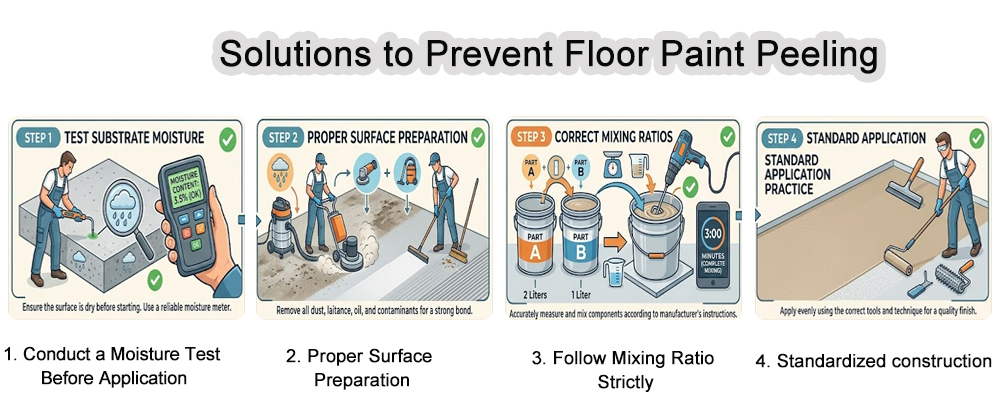
To prevent floor peeling, the key is substrate and construction. The core is to grasp four key aspects: the moisture content must meet the standard, the ground must be clean and dense, the mixing ratio must be right, and the coating must be applied in thin layers.
1. Conduct a Moisture Test Before Application
To avoid high moisture levels, it is important to do moisture test before applying floor paint. This can be done using a moisture meter or by placing a plastic sheet on the concrete and checking for condensation after 24 hours. If the moisture level exceeds the recommended threshold, suggest to wait until the concrete has fully dried before painting.
For damp areas such as underground parking garages and ground floor areas, apply a moisture-proof layer or waterproofing treatment first.
Remember: Do not apply floor paint if the moisture content is too high.
2. Proper Surface Preparation
Proper surface preparation is key step for ensuring the long-term performance of floor coatings. The concrete substrate should be clean, dry, firm, and free of oil, dust, loose particles, and other contaminants. Mechanical grinding should be done before construction to remove concrete laitance, loose layers, and contaminants. Grinding not only cleans and prepares the surface but also opens the concrete pores, creating roughness that enhances the bond between the coating and the substrate, improving adhesion.
After grinding, remember to vacuum to ensure all dust and debris are removed before applying the coating. The substrate’s moisture content, strength, and floor situation should also be checked before application. Areas with loose concrete, cracks, hollow areas, or weak strength should be repaired first. Loose concrete should be removed, and cracks and defects should be repaired using mortar or suitable repair materials to ensure the substrate is firm, stable, and meets coating requirements.
3. Follow Mixing Ratio Strictly and Standardized construction
To achieve the best results, for two-component floor coating must be mixed strictly according to the manufacturer’s specified mixing ratio. This ensures right mixing of the paint components, forming a strong bond and a durable coating. Accurately measure each component and mix evenly to avoid any unevenness that could cause peeling. Stir thoroughly and allow to mature before use. Apply the primer evenly, ensuring no areas are missed, and allow it to dry completely before applying the intermediate coat. Apply in thin coats, following the recommended thickness and re-coat time, avoiding applying a thick coat at once. Control the application environment, ensuring the temperature and humidity are within the material’s tolerance range before application.
In addition to addressing the primary causes of peeling, there are several other tips that can help maintain the integrity of your floor paint:
**Choose the Right Paint**: Choose Forest Paint Brand Flooring Coating that is specifically designed for your type of flooring and the conditions it will be exposed to. For example, epoxy floor coatings are ideal for warehouses, factories and commercial areas requiring high wear resistance and chemical resistance, while polyurethane floor coatings are more suitable for areas exposed to UV light, weathering or temperature changes. For damp environments, moisture-tolerant systems should be selected to ensure long-term coating performance and durability.
**Apply Under Proper Conditions**: Floor coatings should be applied under suitable environmental conditions. Substrate temperature, ambient temperature, humidity and moisture content should meet the product requirements. For best results, apply at 10°C–32°C (50°F–90°F) with low humidity, and avoid extreme temperatures, high humidity or wet substrates to ensure proper curing, adhesion and long-term performance.
**Regular Maintenance**: Regularly check your floors for wear and tear. Promptly solve any issues, such as scratches or chips, to prevent moisture from penetrating and causing further damage.
Floor paint peeling can be a frustrating issue, but understanding the causes and implementing effective solutions can help you achieve a long-lasting and beautiful finish. By conducting moisture tests, ensuring proper surface preparation, and following mixing ratios strictly and Standardized construction, you can significantly reduce the risk of peeling. With the right construction process and maintenance, your painted floors can remain in excellent condition for years.
Post time: Oct-14-2026