
The global industrial flooring market has witnessed significant evolution over the last decade, driven by the demand for more durable, aesthetically pleasing, and easy-to-maintain surfaces. Among the various resinous flooring options available, epoxy remains a primary choice for facility managers, architects, and contractors. However, a common point of confusion arises when choosing between two fundamental application styles: Epoxy Floor Coating and Epoxy Self-Leveling Floor Coating.
While both systems utilize epoxy resins, their chemical formulations, application techniques, and end-use performance characteristics differ significantly. Understanding these nuances is essential for ensuring the longevity of the floor and the efficiency of the facility.
1. Defining the Core Technologies
What is Epoxy Floor Coating?
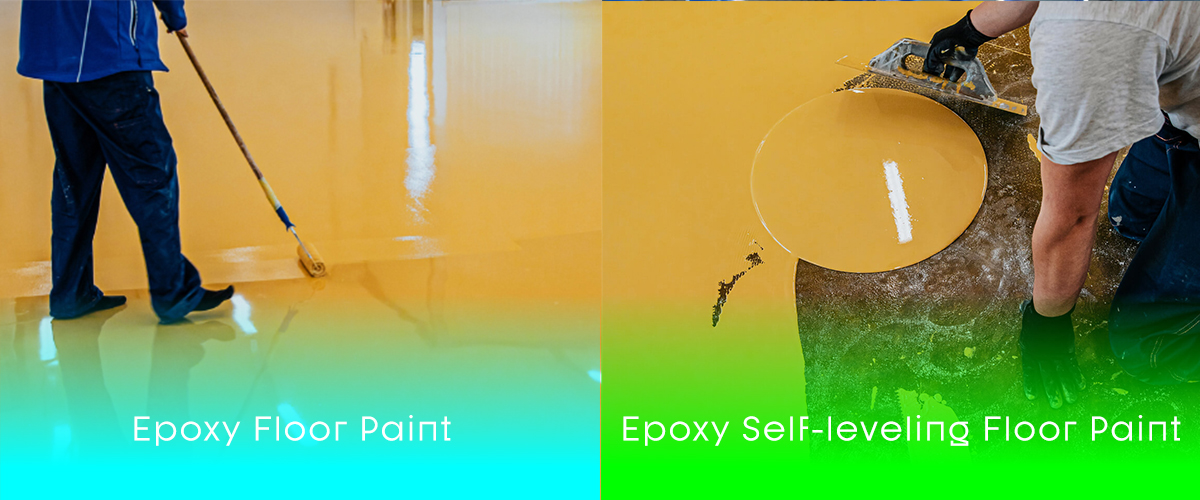
Epoxy Floor Coating, often referred to as a “thin-film” coating, is a high-performance floor finish designed to provide a protective layer over concrete substrates. It is characterized by its method of application—typically involving rollers or brushes—and its ability to follow the existing profile of the floor. Because it is applied in thinner layers, it is an excellent choice for environments where the primary goals are dust-proofing, mild chemical resistance, and cost-effective maintenance.
What is Epoxy Self-Leveling Floor Coating?
In contrast, epoxy self-leveling systems are formulated with lower viscosity resins that possess unique “flow” characteristics. When poured onto a surface, the material naturally spreads out to fill cracks, voids, and minor depressions, creating a perfectly level and smooth surface. This system is typically applied at a much greater thickness than epoxy floor coatings, often ranging from 2mm to 5mm or more, providing a robust, high-build finish that hides imperfections in the underlying concrete.
2. A Deep Dive into the Construction Process
The application phase is where the technical differences between these two systems become most apparent.
The Multi-Stage Process of Epoxy Floor Coatings
Construction for Epoxy Floor Coating is a labor-intensive process focused on uniformity and adhesion.
- Preparation and Priming: The concrete substrate must be mechanically ground or shot-blasted to achieve a specific Concrete Surface Profile. A primer is then applied to seal the pores of the concrete.
- Layering Technique: Using high-quality rollers or brushes, the mixed epoxy resin and hardener are applied. The industry standard usually dictates 2 to 3 coats.
- Curing Intervals: Each coat requires a significant curing window, often around 24 hours depending on ambient temperature and humidity. This staged approach ensures that each layer bonds effectively to the one beneath it, creating a cohesive, multi-layered shield.
- Uniformity Challenges: Because the material follows the floor’s contour, the applicator must be skilled in maintaining a “wet edge” to avoid visible lap marks or uneven color distribution.
The Specialized Execution of Self-Leveling Systems
Self-leveling applications require a higher degree of precision and specialized tools.
- Stringent Surface Leveling: While the material “self-levels,” it cannot overcome massive structural slopes. Detailed pre-leveling work is often required to ensure the substrate is within a specific tolerance.
- The Pour and Spread Method: Rather than using a roller to “paint” the floor, the mixed material is poured in large batches. Applicators use a notched squeegee or a gauge rake to spread the material at a consistent depth.
- De-aeration: A critical step in self-leveling construction is the use of a “spike roller.” As the material flows, air bubbles can become trapped. The spike roller breaks these bubbles, ensuring a glass-like finish without pinholes.
- High-Build Efficiency: Often, the desired thickness and aesthetic are achieved in fewer applications than Epoxy Floor Coating, though the volume of material used per square meter is significantly higher.
3. Performance and Aesthetic Comparison
When evaluating these systems, decision-makers must weigh the trade-offs between cost, durability, and visual appeal.
Durability and Resistance
- Epoxy Floor Coating: These systems offer reliable wear resistance and are effective against light to medium vehicular traffic. They provide a reliable barrier against moisture and common industrial chemicals. However, because they are thinner, they may be more susceptible to impact damage or “telegraphing” (where cracks in the concrete eventually show through the coating).
- Epoxy Self-Leveling Floor Coating: Due to their thickness, self-leveling floors offer superior impact resistance and high compressive strength. They are better suited for heavy-duty environments where heavy machinery or constant pallet jack traffic is expected. Additionally, their chemical corrosion resistance is often enhanced by the sheer volume of resin present in the system.
- Aesthetics: If the goal is a “showroom” finish, self-leveling is the clear winner. It creates a seamless, mirror-like surface that can be customized with various pigments and metallic effects.
- Texture: Epoxy Floor Coating tend to have a slightly rougher or more “orange-peel” texture, which can actually be an advantage in areas where slip resistance is a priority.
Visual Impact
4. Strategic Application Scenarios
The choice between these two systems often comes down to the specific needs of the facility.
Where to Use Epoxy Floor Coating
Epoxy Floor Coating are highly effective for large-scale industrial spaces where functionality outweighs high-end aesthetics.
- Warehouses: Provides a dust-free environment for inventory.
- Manufacturing Workshops: Offers protection against oil spills and tool drops.
- Parking Garages: A cost-efficient way to protect large concrete surfaces from automotive fluids and salt.
- Back-of-House Areas: Ideal for utility rooms and storage areas where the floor is not visible to the public.
Where to Use Epoxy Self-Leveling Floor Coating
Self-leveling systems are the preferred choice for high-profile areas and environments with strict hygiene requirements.
- Commercial Shopping Malls: The high-gloss finish enhances lighting and provides a premium feel for shoppers.
- Exhibition Halls: Creates a perfectly flat stage for displays and heavy foot traffic.
- Pharmaceutical and Food Labs: Because the surface is perfectly smooth and seamless, it is incredibly easy to sanitize, leaving no pores or cracks for bacteria to colonize.
- Modern Office Spaces: Allows for creative, high-end interior designs with custom color schemes.
5. Economic Considerations: Budget vs. Value
The budget for a flooring project involves more than just the cost of the epoxy.
- Initial Investment: Epoxy Floor Coating generally have a lower entry price point due to lower material consumption. The labor is straightforward, making it an attractive option for budget-conscious projects.
- Long-Term Value: Self-leveling systems, while more expensive upfront, may offer better long-term value in high-traffic or high-impact zones. The thicker build means the floor will take much longer to wear down to the concrete, potentially extending the time between major refurbishments.
- Installation Speed: Self-leveling can sometimes be installed faster in terms of “active hours” since it covers the floor in fewer layers, but it requires a larger, more skilled crew to manage the pour.
6. Maintenance and Sustainability
In the modern global market, sustainability and ease of maintenance are paramount. Both systems are considered durable options that reduce the need for frequent floor replacements, thereby lowering the environmental footprint of a building.
To maintain these floors:
- Cleaning: Both require only basic sweeping and mopping with pH-neutral cleaners.
- Safety: In areas prone to spills, anti-slip aggregates can be broadcast into either system to improve traction.
- Environmental Standards: Modern epoxy formulations focus on low-VOC content, meeting international environmental certifications without compromising on performance.
Conclusion
The decision between Epoxy Floor Coating and epoxy self-leveling floor coatings is not about which product is “better,” but rather which product is “right” for the specific environment. Epoxy Floor Coating offer a practical, cost-effective, and durable solution for industrial settings where utility is king. Self-leveling systems provide an elite, high-durability, and ultra-smooth finish for commercial and high-specification industrial zones.
Regardless of the choice, the success of the installation depends on meticulous surface preparation and professional application. By understanding the technical differences outlined above, facility managers can ensure they select a flooring system that provides lasting protection and meets their operational goals.
Post time: Mar-12-2026