

Fire safety is an essential consideration in modern construction and industrial settings. Among the tools available to bolster fire resistance are fire-retardant coatings, designed to protect structural substrates from damage and delay the spread of flames. These coatings primarily fall into two categories: thin-film and thick-film fire-retardant coatings. Both types have distinct characteristics, application methods, and performance profiles that make them ideal for specific use cases. Understanding their differences is crucial for selecting the right solution.
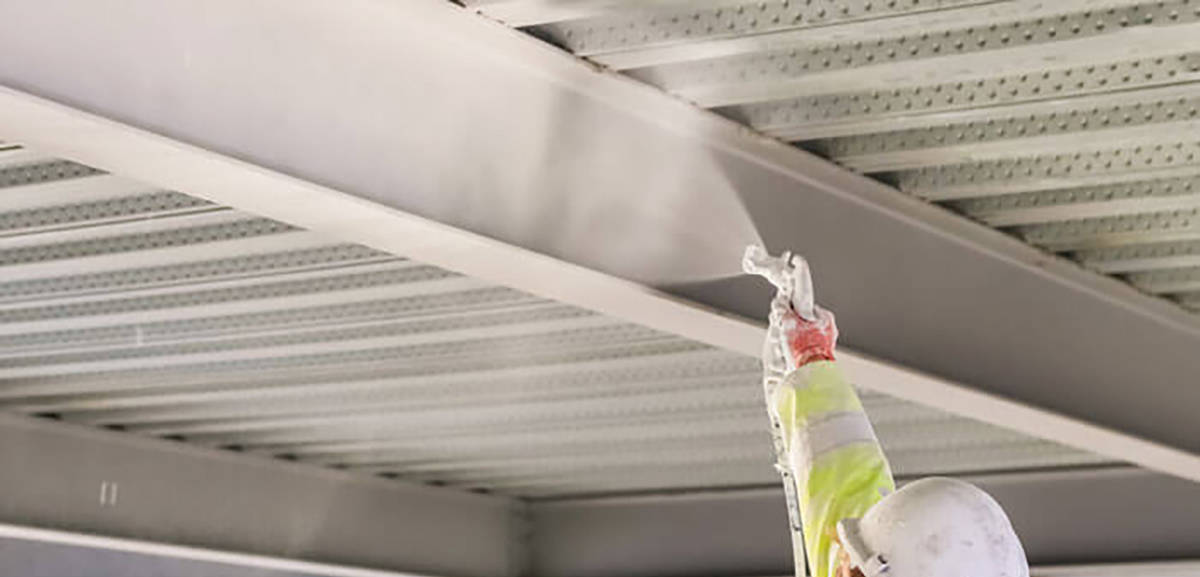
Thin-Film Fire-Retardant Coatings: Precision Meets Elegance
• Definition
Thin-film fire-retardant coatings are lightweight fireproof materials. They function by forming a protective film on the substrate, which expands into an insulating layer in case of fire, thereby reducing heat transfer and slowing combustion processes.
• Features
1. Lightweight Design
Thin-film coatings are particularly advantageous for structures with strict load-bearing requirements. Their minimal thickness ensures they do not add significant weight to the substrate, making them ideal for lightweight architectures.
2. Ease of Application
These coatings can be applied using simple methods such as spraying, brushing, or roll-on techniques. Their ease of use allows for rapid coverage of large areas, contributing to lower labor costs and time investment.
3. Fast Drying Time
Thin-film fire-retardant coatings are designed to dry quickly, minimizing downtime during construction projects and increasing efficiency.
4. Enhanced Aesthetics
With a smooth, uniform finish, thin-film coatings preserve—if not enhance—the appearance of the underlying substrate. This makes them the preferred choice for aesthetically demanding applications, such as commercial and office buildings.
• Application Scenarios
Thin-film fire-retardant coatings shine in environments requiring high fire protection without compromising visual appeal or space efficiency. These coatings are ideal for:
- Steel and concrete structures within skyscrapers
- Large-scale commercial spaces
- Residential complexes
- Indoor settings with limited space or stringent aesthetic requirements
Thick-Film Fire-Retardant Coatings: Heavy-Duty Fire Protection
• Definition
Thick-film fire-retardant coatings are robust materials. By forming a dense, heat-resistant layer, they offer superior durability and long-lasting fire protection.
• Features
1. Exceptional Fire Resistance
Unlike their thin-film counterparts, thick-film coatings excel in high-temperature and prolonged fire exposure. Their dense protective barrier delays substrate heating and structural degradation during fires, providing longer evacuation and intervention times.
2. Durable Performance
Thick coatings demonstrate strong resistance to physical impact, abrasion, and harsh environmental conditions, making them ideal for applications that require structural resilience.
3. Versatile Usage
Their ability to withstand extreme fire scenarios makes thick-film coatings highly adaptable to various high-risk settings.
• Application Scenarios
Due to their enhanced durability and fire resistance, thick-film fire-retardant coatings are particularly suitable for:
- Industrial facilities (e.g., petrochemical plants, metallurgy workshops, power facilities)
- Warehouses storing combustible materials
- Underground structures, such as tunnels and parking facilities
- Critical infrastructure requiring extended fire protection
Key Differences Between Thin-Film and Thick-Film Coatings
To clarify the distinctions between these two types of fire-retardant coatings, the following table provides a precise comparison:
| Feature | Thin-Film Fire-Retardant Coating | Thick-Film Fire-Retardant Coating |
| Application Methods | Spray or brush application, quick | May require heavier equipment |
| Drying Time | Faster | Slower due to increased thickness |
| Application Scenarios | Commercial/office buildings | Industrial plants, critical facilities |
| Aesthetic Appeal | High visual quality | May compromise visual appeal |
Thin-film coatings prioritize visual appeal and ease of application, making them perfect for urban commercial spaces where safety and design must coexist. Thick-film coatings provide robust fire resistance and durability, catering to industrial or high-risk environments where safety takes precedence over aesthetics.
In Conclusion: A Tailored Approach to Fire Safety
While both thin-film and thick-film fire-retardant coatings offer valuable fire protection, their suitability depends on the specific requirements of a project. Factors such as the type of structure, fire resistance rating, environmental conditions, and aesthetic demands must be carefully assessed before selecting the appropriate product.
In practice, combining thin-film and thick-film coatings can create a synergistic fire protection strategy for modern buildings and facilities. For instance, thin-film coatings can cover exposed areas where appearance matters, while thick-film coatings can provide heavy-duty protection in concealed or industrial zones. This tailored approach ensures comprehensive fire safety without compromising durability, design, or functionality—essential for modern construction in an era of increasing fire hazards.
By leveraging the strengths of both thin-film and thick-film fire-retardant coatings, architects, engineers, and construction professionals can confidently navigate the challenges of fire safety, protecting lives and assets while adhering to stringent building codes.
Post time: Mar-27-2026