
In the complex world of industrial protective coatings, selecting the right anti-corrosion system is often a balancing act between durability, aesthetics, and environmental resistance. For facility managers, engineers, and procurement specialists worldwide, two of the most frequently encountered options are Acrylic Polyurethane Anti-corrosion Paint and standard Polyurethane Anti-corrosion Paint.
While these two coatings share similar chemical roots, their specific formulations create distinct performance profiles suitable for very different environments. This article provides an in-depth analysis of their differences, composition, performance metrics, and application areas to help you make an informed decision for your next project.
1. Understanding the Chemistry: Composition and Core Properties
To understand why these paints behave differently, we must first look at their chemical makeup. The fundamental difference lies in the modification of the resin backbone, which dictates how the coating reacts to external stressors like ultraviolet (UV) radiation and chemical exposure.
Acrylic Polyurethane Anti-Corrosion Paint
This coating is a hybrid solution. Its primary components are high weathering hydroxyl-containing acrylic resin. Manufacturers often formulate this type using either water-based or solvent-based methods, offering flexibility in application.
- Key Characteristic: The inclusion of acrylic resin significantly alters the polymer structure, enhancing its stability against sunlight. This modification is primarily aimed at combating “chalking” and yellowing.
- Primary Focus: Balancing physical protection with aesthetic retention in outdoor settings.
Polyurethane Anti-Corrosion Paint
This category generally refers to coatings where the main film-forming substance is polyurethane resin. These are predominantly solvent-based formulations known for their cross-linking density.
- Key Characteristic: The tight molecular structure of polyurethane resin provides a hard, impenetrable barrier. It focuses on mechanical strength and resistance to penetration by aggressive agents.
- Primary Focus: Delivers robust physical defense against abrasion and chemical attacks in high-intensity environments.
2. Detailed Performance Comparison
When specifying a coating, it is crucial to match the paint’s performance attributes with the specific threats present in the environment. Here is how these two heavyweights compare across three critical metrics.
A. Weather Resistance and UV Stability
One of the most significant differentiators between these two coatings is their reaction to the sun.
- Acrylic Polyurethane: This is the preferred choice for environments with high UV exposure. Thanks to the acrylic component, this paint demonstrates impressive color and gloss retention. It is specifically engineered to resist the degradation caused by ultraviolet rays, which can break down chemical bonds in other coatings. For projects where visual appeal must be maintained over years of outdoor exposure, this is a strong candidate.
- Polyurethane: While standard polyurethane offers solid protection against the elements, it has a known vulnerability to UV radiation. Over extended periods of direct sunlight exposure, standard polyurethane tends to undergo photodegradation, leading to fading, yellowing, or a loss of gloss. While the protective integrity often remains, the aesthetic finish may decline faster than its acrylic counterpart.
B. Chemical Resistance
For facilities dealing with harsh substances, the chemical profile of the coating is paramount.
- Polyurethane: This is where standard polyurethane often takes the lead. Its chemical structure generally offers superior resistance to a wider range of aggressive agents. It performs exceptionally well in environments where exposure to acids, alkalis, solvents, and salts is a daily occurrence. It is frequently the go-to solution for chemical plants and containment areas.
- Acrylic Polyurethane: While this coating offers respectable resistance to general industrial pollutants and mild chemicals, it may not be the optimal choice for environments with constant exposure to strong acids or alkalis. Its formulation prioritizes weatherability, sometimes at the slight expense of extreme chemical inertness compared to pure polyurethane systems.
C. Adhesion, Flexibility, and Abrasion
The mechanical properties of the film determine how well it stays on the substrate and handles physical stress.
- Polyurethane: Known for its “toughness,” polyurethane anti-corrosion paint offers excellent abrasion resistance. It forms a hard shell that resists scratching and impact, making it ideal for floors or machinery that sees heavy physical abuse. It provides excellent adhesion, particularly to effectively prepared metal surfaces, creating a bonded protective layer.
- Acrylic Polyurethane: This formulation offers a balance of strong adhesion and notable flexibility. The acrylic modification allows the coating to retain a degree of elasticity. This is particularly beneficial for substrates that might expand and contract due to temperature changes. It resists cracking and peeling by moving slightly with the underlying material.
3. Strategic Application Areas: Where to Use Which?
Choosing the wrong coating for an application can lead to premature failure and costly rework. Based on their performance profiles, here are the recommended sectors for each type.
Ideal Scenarios for Acrylic Polyurethane
This coating is the champion of the “Outdoor Aesthetic” category. It is widely utilized in sectors where the equipment or structure is a visual representation of the brand and faces the open sky.
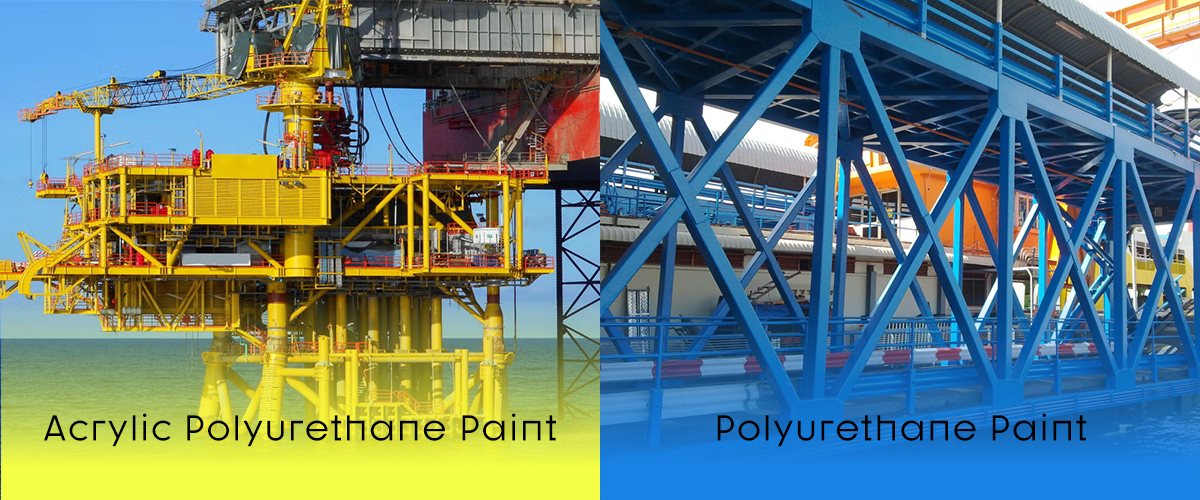
- Infrastructure and Architecture: Building exteriors, steel bridges, and municipal facilities that require long-term exposure to the natural environment without looking worn or faded.
- Transportation: It is a common choice for the topcoats of automobiles, railway cars, and commercial vehicles.
- Marine Superstructures: While not always for the hull underwater, it is excellent for the parts of ships above the waterline that need to resist salt spray and intense sun glare.
- Outdoor Machinery: Cranes, wind turbine towers, and agricultural equipment.
Ideal Scenarios for Polyurethane Anti-Corrosion Paint
This coating is the champion of the “Industrial Heavy-Duty” category. It is chosen when the environment is hostile, and protection is prioritized over long-term color retention.
- Chemical and Petrochemical Industry: Storage tanks, pipelines, and reaction vessels in chemical plants and oil fields where chemical spills are a risk.
- Heavy Machinery: Industrial equipment that faces constant friction, impact, and wear.
- Marine Interiors and Decks: Areas of ships that face heavy foot traffic or cargo movement and need high abrasion resistance.
- Flooring: Industrial warehouse floors that need to withstand forklift traffic and potential chemical drips.
4. Summary of Unique Advantages
To summarize the decision-making process, here are the distinct advantages that each coating brings to the table.
Why Choose Acrylic Polyurethane?
- Superior Weatherability: It stands up to the sun. If your asset is outdoors, this coating helps maintain its “new” look for longer.
- Application Ease: It generally dries relatively quickly and is user-friendly, making it suitable for large-area coating projects where efficiency is key.
- Balanced Flexibility: It accommodates thermal expansion, reducing the risk of cracking on large metal structures.
- Robust Protection: It offers a harder shield against physical wear, tear, and abrasion.
- Chemical Defense: It provides a stronger barrier against a broader spectrum of industrial chemicals.
- Metal Bonding: Its excellent adhesion properties help extend the lifespan of metal equipment by preventing under-film corrosion.
Why Choose Polyurethane?
Conclusion: Making the Right Choice
The choice between Acrylic Polyurethane and Polyurethane Anti-corrosion paint is not about which product is “better” in a general sense, but which is more appropriate for your specific constraints.
If your project involves outdoor structures, bridges, or vehicles where maintaining color and gloss against sunlight is critical, Acrylic Polyurethane is likely your optimal solution.
Conversely, if you are coating machinery, indoor industrial floors, or chemical storage units where physical durability and chemical inertness are the top priorities, Polyurethane Anti-corrosion paint remains the industry standard for heavy-duty protection.
By carefully evaluating the environmental conditions—specifically the levels of UV exposure, chemical presence, and physical abrasion—you can select the coating that ensures the longevity and safety of your assets.
Frequently Asked Questions (FAQ)
Q: Can I apply Acrylic Polyurethane over an epoxy primer?
A: Yes, this is a very common system. An epoxy primer provides excellent adhesion and corrosion protection for the metal, while the Acrylic Polyurethane topcoat protects the epoxy from UV degradation.
Q: Is Polyurethane paint suitable for residential use?
A: While possible, it is typically formulated for industrial use due to the solvents involved. Always check the specific product’s Technical Data Sheet (TDS) and safety guidelines before considering it for non-industrial applications.
Q: Which paint lasts longer?
A: Longevity depends on the environment. In a high-UV environment, Acrylic Polyurethane will generally last longer before chalking. In a high-abrasion or chemical environment, standard Polyurethane will likely maintain its integrity longer.
Post time: Mar-04-2026